Good Friday

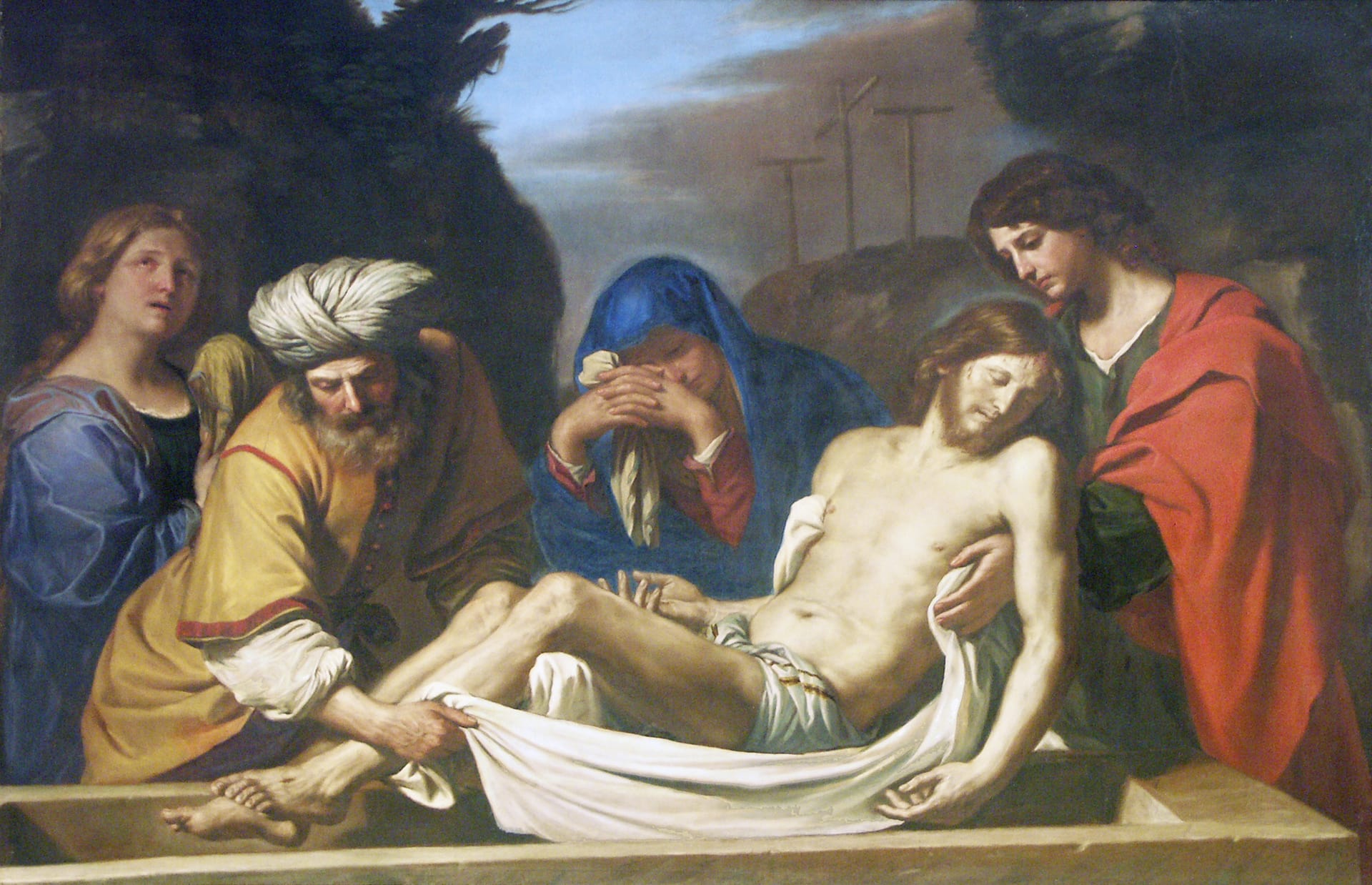
A non-religious friend of mine asked me, “What’s so good about Good Friday?  What’s so good about Jesus being tortured and dying?” It got me thinking about how lazy we have become in our language.  In Shakespeare’s time the average person used about 30,000 different words; we use about 5,000.  We substitute one word to mean so many things that the word loses its real meaning.  We use the word “good” when we mean “tasty” (a good meal), “entertaining” (a good movie), “pleasant” (good weather), “loyal” (a good friend), and let’s not forget “nice” (good manners). “It is good” spoken by God at Creation, gives us insight into what goodness really means.  At this moment there is perfect order in the universe.  All of nature is in harmony with God.  The “good” accomplished on Good Friday is that Jesus has completed the work to restore the universe to perfect order.  We have the opportunity to be restored to the state of grace that had been lost and can choose to live in harmony with God. What is good about Good Friday?  The price for our sin had finally been paid – one time for all eternity.  Every time God entered into a covenant with humankind, we broke the covenant.  He finally made a covenant with the one person who could and would keep it – His Son – and God became Man for us to make and keep the covenant as a Man for all humanity.  It is His fulfilling of the covenant perfectly that is “good.”  The word “good” is a reflection of God Himself in His glory, in His mercy, and in His love. It is this love which we seek to understand better and why Good Friday calls every Catholic home – even those who have been away for a while.  To contemplate His suffering is to enter into the mystery of His profound love for us.  We cannot grow in our love for Him without entering into mystery of His suffering.  It is this willingness to “compassionate” Jesus, to enter into His suffering with Him, placing ourselves at the foot of the cross next to Blessed Mother, that brings so many graces into our lives, enabling us to break the chains of habitual sin and free our souls to love Him more deeply and become the best version of ourselves. I have written 15 meditations of The Passion below.  They can be used for a 15 decade Rosary, a 15 decade Chaplet of Divine Mercy, or Stations of the Cross.  The tone in these meditations is unlike my regular posts.  They are very graphic, so sensitive people may find them disturbing.  If you don’t want to read them, stop reading here. 1st Decade:  Pilate knew Jesus was innocent, but he was more interested in keeping power. He knew that once he gave Jesus over to be scourged, the soldiers would be merciless to Jesus.  He had seen it before many times.  Many people never made it…
Continue ReadingGood Friday

The 4th Station

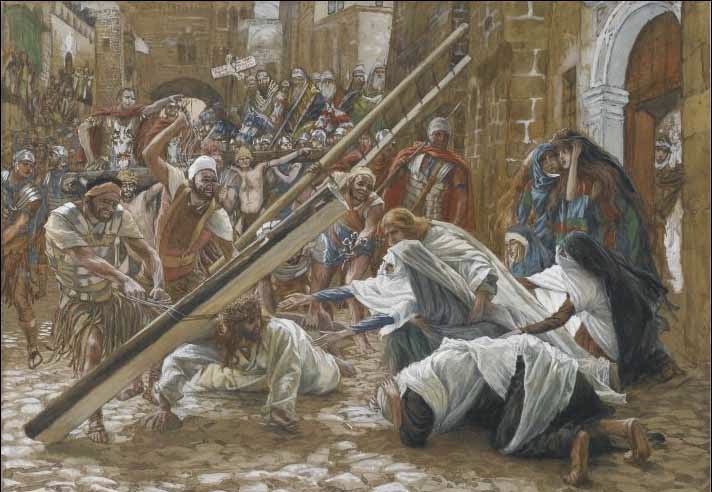
“To what can I compare you, O daughter Jerusalem?  What example can I show you for your comfort, virgin daughter Sion?  For great as the sea is your distress; who can heal you?" (Lam 2: 13) We often reflect on the Old Testament prophesies of Our Lord, but there are also prophesies of His Mother that tell us more about the Blessed Virgin Mary and all that She suffered.  It is of Her that the words of Lamentation were written. From the time She said yes to the Archangel Gabriel, She consented to be a part of salvation history.  Even if She had not known in that moment that Lamentations prophesied Her suffering, She certainly knew it at the Presentation when Simeon and Anna of Phanuel told Her what the Messiah would suffer and that a sword would pierce Her own heart. For the rest of Her life She carried the burden of knowing what Her Son would suffer.  As His time grew near, Her continued prayers to God to allow Her to suffer in His place were intensified.  She is the only one among us without original sin who lived in a state of grace who could be that spotless lamb of sacrifice.  But this was not in God’s plan.  Mary accepted that and then asked Our Heavenly Father that She be permitted to suffer with Him -- and She did. This is the mother Jesus gave us from the cross.  A woman who loves so much that She was willing to suffer for our salvation and willingly gave up Her Beloved Son.  This is our spiritual mother who offers us no reproach but only an invitation to adore Her Son.

Continue ReadingThe 4th Station

Blessed Are The Meek

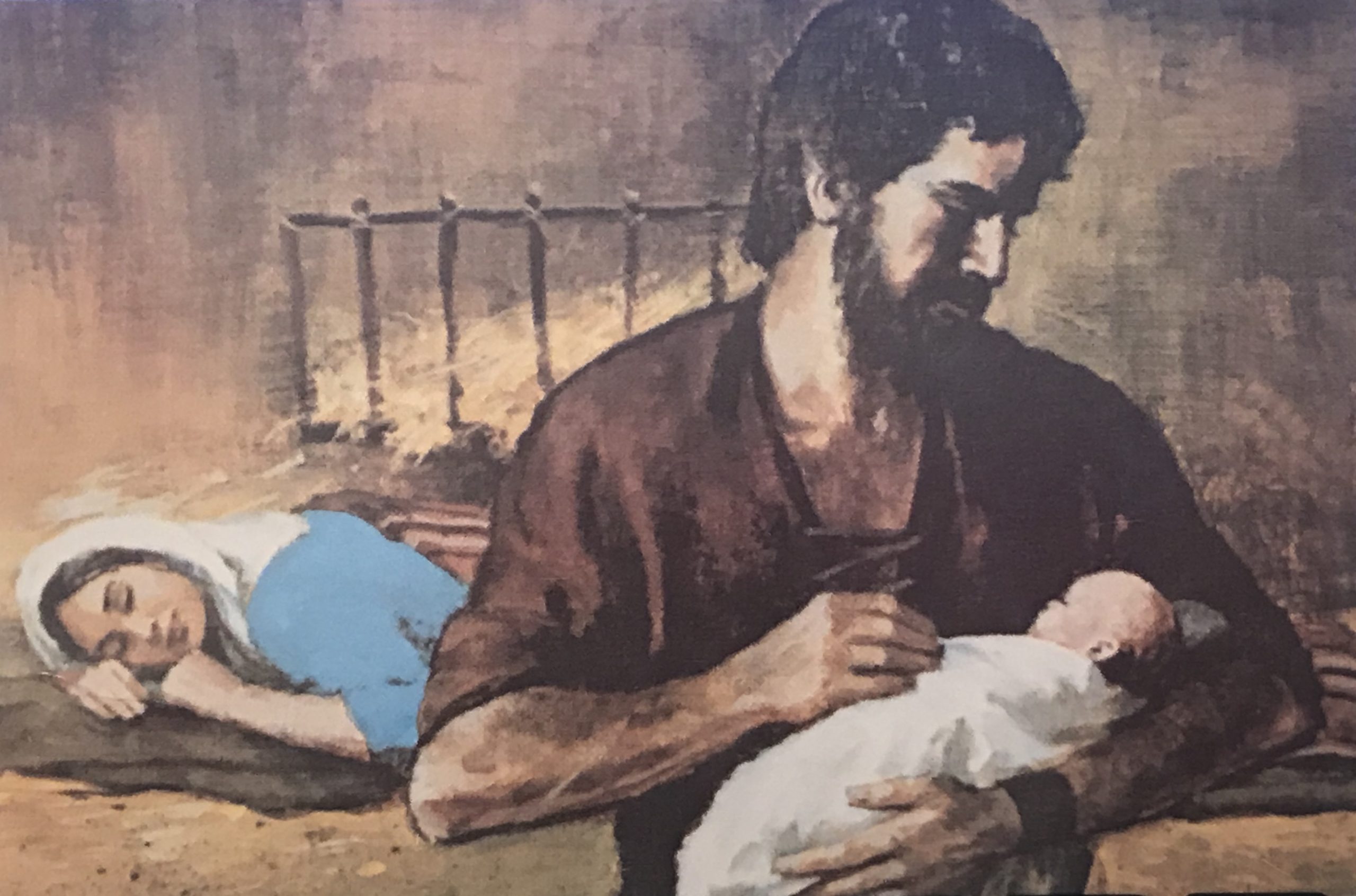
…for they shall inherit the earth.  How many times have we read this passage and thought, “Well I am not going to be a doormat.  Meekness is definitely not in my future.”  We forget that words change over time and the modern definition, “overly submissive or compliant,” is vastly different than the original meaning when it was translated from Latin into English: “gentle, kind; humbly patient” (dictionary.com).  We have beautiful examples of true meekness in both the Old and New Testaments: Moses and St. Joseph. When we first meet Moses in the book of Exodus, he is living as the adopted son of Pharaoh’s daughter.  He comes across an Egyptian beating a Hebrew slave and kills him.  While he is defending the weak, he certainly did not choose the meekest response --  but we are only at the beginning.  When Pharaoh finds out, Moses flees to Midian and stays there, marrying Zipporah and tending her father’s flocks.  The many years of quiet solitude with the Lord allow Moses to nurture his prayer life and transform his soul into the best version of himself.  When God speaks to him from the burning bush, he is ready – after a little convincing. Moses shows great courage and trust in God when he faces Pharaoh repeatedly and then leads the Israelites across the Red Sea.  Through all the trials in the desert and the complaints of the wanderers, he is patient.  When his father-in-law, Jethro, meets him in the desert (Ex 18), Moses is gracious and humbly listens to and follows his advice. Time and again Moses demonstrates his compassion for his people.  When the Israelites make a golden calf (Ex 32:7), God tells Moses that He will destroy them and make a new nation from Moses.  Moses asks for mercy and God grants it.  Numbers 12:3 tells us: “Now the man Moses was very meek, more than all men that were on the face of the earth,” yet, this does not stop his sister Miriam from putting him down and speaking against him.  God afflicts her with leprosy for her arrogance and Moses, instead of gloating, chooses forgiveness and asks God to restore her.  When they reach the Promised Land, the Israelites refuse to enter it because the current inhabitants look intimidating.  They complain against Moses – I guess Miriam’s lesson was lost on them – and God tells Moses He will destroy them and make a new nation from Moses.  Again, Moses asks for mercy and God grants it.  Moses could take the easy way out, but chooses to rise above hurt feelings and anger. St. Joseph also could have given in to his hurt feelings when he finds out Mary is pregnant.  He could have had her stoned, yet he chooses to say nothing and divorce her quietly.  Had he gone through with the divorce without stating a reason, the community would have turned against him; his reputation as an unjust man would have made his life extremely difficult, yet…

Continue ReadingBlessed Are The Meek

Blessed Are The Merciful

This Lent is different from every other Lent we have ever experienced and we all can sense that we need to respond to Our Lord’s call to repent.  We are sincere in our desire to do better, just as we are every year, but this year we need to go deeper.  Every Lent we work on giving up our vices, sins, and bad habits and succeed for a short time, but then we slide backward.  This happens because we are only pulling out the weeds that are easily visible; we need to dig deep and pull out the roots.  At the root is our lack of forgiveness.  Yes, we do struggle to forgive, again and again, and we keep having to forgive every time something triggers the memory of the hurt and the pain.  We need to get to that place where we can let go of the pain. Letting go of the pain is not easy.  As bad as it is, it is ours and we therefore hold onto it.  Sit with that a minute because I am pretty sure you have not thought about it quite this way before.  The hurts we have experienced, whether physical, emotional, or psychological can run very deep.  When we refuse to let them go, it is like keeping a vicious dog chained in our yard near our front door.  Every time we go near the dog it bites us.  We should get the dog out of our yard, but we don’t.  We keep letting it bite us and injure us every time we go by.  We have anxiety about leaving the house, but we still keep the dog.  Even worse, it keeps our beloved Jesus on the other side of fence when he really wants to be invited and welcomed into our home.  Yes, our lack of forgiveness creates a barrier so that Jesus is unable to dwell in our hearts (He respects our free will) and bring with Him His peace. There are so many different reasons how and why we got here, but there is one path out of this pain.  We need to take our suffering to Jesus.  Confess our sins and our lack of forgiveness.  The Holy Spirit can bring us graces to help us.  Spend time in Eucharistic Adoration every week.  It is in the silence that Jesus comes to us to heal us.  This takes time, so carve out an hour a week for a new habit.  Meditate on the Sorrowful Mysteries.  What was Jesus experiencing and how was He feeling?  He has experienced every suffering that we have ever had so He understands.  If we offer up our suffering to Him and join it to His suffering on the Cross, our suffering takes on redemptive value, and like Jesus, our Heavenly Father will send us angels to help us in our suffering and our own St. Simon to help us carry our crosses.  The cross doesn’t go away, but we will be at peace and…

Continue ReadingBlessed Are The Merciful

End of content

No more pages to load