

Blessed Are The Merciful

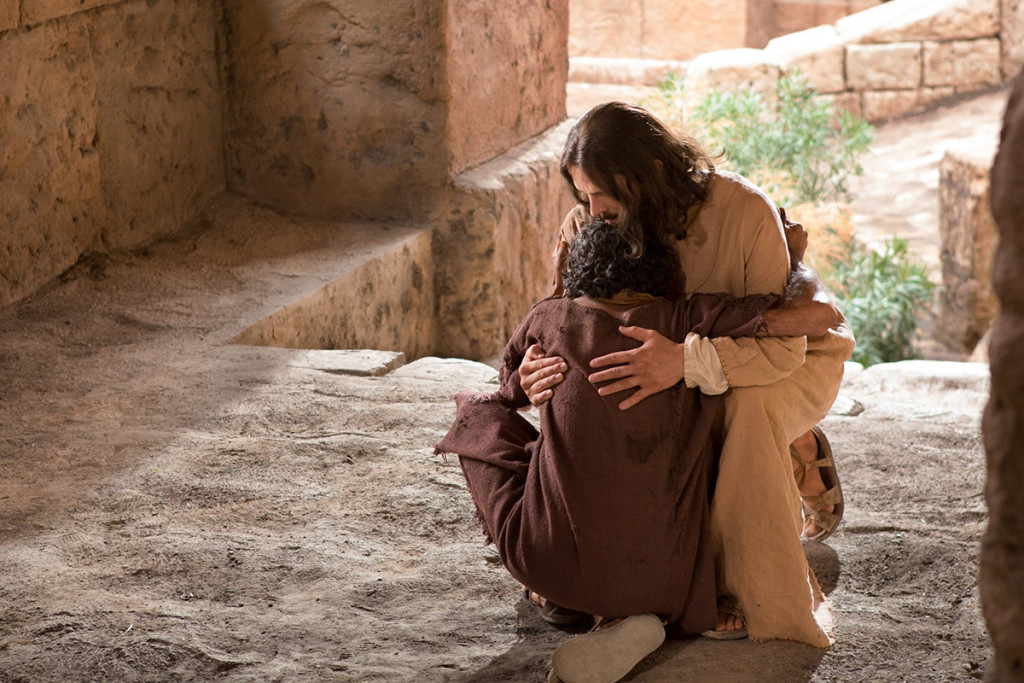
This Lent is different from every other Lent we have ever experienced and we all can sense that we need to respond to Our Lord’s call to repent.  We are sincere in our desire to do better, just as we are every year, but this year we need to go deeper.  Every Lent we work on giving up our vices, sins, and bad habits and succeed for a short time, but then we slide backward.  This happens because we are only pulling out the weeds that are easily visible; we need to dig deep and pull out the roots.  At the root is our lack of forgiveness.  Yes, we do struggle to forgive, again and again, and we keep having to forgive every time something triggers the memory of the hurt and the pain.  We need to get to that place where we can let go of the pain. Letting go of the pain is not easy.  As bad as it is, it is ours and we therefore hold onto it.  Sit with that a minute because I am pretty sure you have not thought about it quite this way before.  The hurts we have experienced, whether physical, emotional, or psychological can run very deep.  When we refuse to let them go, it is like keeping a vicious dog chained in our yard near our front door.  Every time we go near the dog it bites us.  We should get the dog out of our yard, but we don’t.  We keep letting it bite us and injure us every time we go by.  We have anxiety about leaving the house, but we still keep the dog.  Even worse, it keeps our beloved Jesus on the other side of fence when he really wants to be invited and welcomed into our home.  Yes, our lack of forgiveness creates a barrier so that Jesus is unable to dwell in our hearts (He respects our free will) and bring with Him His peace. There are so many different reasons how and why we got here, but there is one path out of this pain.  We need to take our suffering to Jesus.  Confess our sins and our lack of forgiveness.  The Holy Spirit can bring us graces to help us.  Spend time in Eucharistic Adoration every week.  It is in the silence that Jesus comes to us to heal us.  This takes time, so carve out an hour a week for a new habit.  Meditate on the Sorrowful Mysteries.  What was Jesus experiencing and how was He feeling?  He has experienced every suffering that we have ever had so He understands.  If we offer up our suffering to Him and join it to His suffering on the Cross, our suffering takes on redemptive value, and like Jesus, our Heavenly Father will send us angels to help us in our suffering and our own St. Simon to help us carry our crosses.  The cross doesn’t go away, but we will be at peace and…
Continue ReadingBlessed Are The Merciful

The Leper is Healed

In today’s Gospel, Jesus heals a leper.  In Biblical times, leprosy was incurable and highly contagious. It was considered a punishment for sin.  People believed that what was on the inside was manifested on the outside.  The leper was therefore not shown mercy, but cast out from society.  When Jesus approaches the leper and touches him, this is the first human contact the leper has had in years.  The leper has lived apart from family and friends and has not received a human touch let alone a hug for a very long time.  Jesus reaches out with compassion, mercy, and love and touches him, healing first his broken spirit and then healing his body. In our society today, leprosy is more widespread than ever and far more damaging because it is on the inside where we don’t readily see it and we are insensitive to the damage it causes because we have lived this way for so long.  Jesus comes to us this Lent to heal us of our leprosy. Our leprosy is a disease of the heart.  How many times have we been rejected from family and friends because we don’t conform in some way to who they think we should be or how they believe we should think?  How many times do we feel the need to “fit in” because we are afraid that others won’t like our real selves?  How many times do we have judgmental thoughts or say unkind things about others because they are different from us?  Each of us has been both the leper and the one who has treated another as a leper in some way. This is precisely what Jesus wants to heal in us and He will heal us if we approach Him with faith. Jesus knows everything about us; we cannot hide our flaws, idiosyncrasies, or sins from Him.  Yet when we were in sin He died for us.  Even in our most unlovable moments, He still loves us.  More than anything else, this fact should give us the courage to look deep inside ourselves because He will heal everything we don’t like seeing if we ask Him.  He awaits our approach to give us His mercy, the same mercy He had for the lepers of biblical times.  His mercy in the Sacrament of Reconciliation completely restores us and cleans even our darkest corners. He wishes to heal our woundedness from being treated as a leper as well.  Just as He touched the leper, He touches us in the holy Eucharist.  He places Himself in our hands.  This isn’t a figure of speech.  God Himself descends from Heaven and transubstantiates – changes – the bread and wine into Himself.  We have the incredible gift of being able to touch Him and be touched by Him every day of our lives.  How many wounds He can heal if we trust Him! This Lent He invites us to be reconciled with Him.  He waits for us with mercy, ready to forgive.  He…

Continue ReadingThe Leper is Healed

What is Lent?

From the Question Box: Why do Catholics have Lent and why do you fast? Scripture tells us: “There is a season for everything, a time for every occupation under heaven: a time for giving birth, a time for dying; a time for planting, a time for uprooting what has been planted.” (Ecclesiastes 3:1-2)  We look to nature and the patterns that God created to understand the rhythms and cycles in nature and in our lives.  These cycles have a spiritual element as well as a physical element.  Just as God created cycles with day and night, the seasons, birth--life--death, our spiritual journey has a cycle as well.  God gave a time to plant and a time to harvest, and He also gives us a time for spiritual planting and spiritual harvesting.  Thus the cycle of Lent precedes Easter. In our journey to become closer to God, we are often as consistent as the waves on the beach; the tide comes in, the tide goes out.  We experience the push and pull of having worldly demands as well as spiritual demands on our time.  There is a continual battle between our wants and our needs.  The gift of the seasons of the Church (and I mean all Christianity here) is therefore another sign of God’s great mercy and compassion for us.  He gives us the seasons in the Church to focus on different aspects of our spiritual progress.  Just as He gives us day to work and night to rest, He gives us Lent to really focus on drawing nearer to Him. Lent maintains the Biblical patterns God set forth in Scripture.  Moses fasted for 40 days when he was with the Lord receiving the 10 Commandments (Ex 34:28). The forty days of Lent repeat the pattern of Jesus’ 40 days in the desert in which He fasted and prayed at the beginning of His public ministry (Lk 4:2-4). Lent is the time of spiritual planting through fasting, prayer, and almsgiving.   Jesus instructs his disciples how to fast in a way that is pleasing to God: “When you fast . . . wash your face, so that it will not be obvious to others you are fasting . . . and your Father who sees what is done in secret will reward you.” (Mt 6:16-18) Jesus models for us the incredible power of fasting when the disciples fail to cast out a demon and turn to Jesus who casts it out and explains, “This kind is not cast out but by prayer and fasting.” (Matthew 17:20)  In the Acts of the Apostles, Luke gives numerous examples of the disciples fasting to know the Will of God (Acts 13:2), for spiritual strength before a great undertaking (Acts 13:3-4), and for spiritual growth and wisdom (Acts 14:23).  While Catholics often fast throughout the year, the Church calls us to be united in our fast on Ash Wednesday and Good Friday. Lenten prayer amplifies our spiritual growth by looking deeply at Jesus’ suffering starting…

Continue ReadingWhat is Lent?

Ordinary Time

The feasts of the Liturgical Season of Christmas (Christmas, Mary Mother of God, Epiphany and the Baptism of the Lord) have passed and we are now in Ordinary Time.  For many, it’s time for the post-Christmas blues as we pass through the cold, dark, winter days waiting for spring.  But this week, the readings start off with an invitation and miracles. “The Kingdom of God is at hand.” “Follow Me.” Jesus casts out unclean spirits and heals the sick (Mark 1-2). What is Jesus saying to us about ordinary time?  When He walked into Capernaum and cast out demons who ravaged their victims, it was an ordinary day.  People were caring for their families, even those with unclean spirits, as best they could and Jesus walked right into their messy lives and healed them.  People were busy at work; Peter and Andrew casting their nets and James and John mending theirs. An ordinary day, and Jesus walked up to them and invited them to follow Him.  He healed Peter’s mother-in-law of an ordinary fever, then healed many in the town.  The first four apostles dropped everything in their lives when He invited them to travel with Him as He preached to the towns of Galilee. Ordinary time is an invitation to build up our faith by letting God into even the small moments in our lives.  Did your teething baby keep you up all night?  God was there.  Did your child take his first steps? God was there.  Did you have a nagging headache because work was stressful?  God was there. Did you wash 3 loads of laundry? God was there.  Did you do home repair or car maintenance? God was there.  Did you serve yet another delicious meal to your family – or burn the pot like I did?  God was there.  Did you enjoy a phone call from a dear friend? God was there.  Did you spend the evening paying bills? God was there.  Did you receive a hug -- or experience the loneliness of no hug today? God was there.  Did you enjoy a sunny day, a beautiful sunset, a starry night -- or experience yet another day of ongoing rain, snow, or cold?  God was there.   He is with us in all these moments and calls us to be present with Him in the present moment.  It is in the “now” that we build relationships with others and with God.  He wants time with us for daily conversation and that also means being quiet long enough for Him to speak.  How different would your day have been if you had talked to Him about your weariness, disappointment, frustration, boredom, or sorrow – or thanked Him for all the moments of laughter and joy?  How different will tomorrow be when you realize He is right there helping you carry your crosses?  How different will tomorrow be when you notice all the blessings and little miracles around you? Our circumstances may not change, but our ability to endure…

Continue ReadingOrdinary Time

End of content

No more pages to load