

Zechariah

“And behold, you will be silent and unable to speak, until the day on which these things shall be, because you have not believed my words, which will be fulfilled in their time.” (Lk 1:20) Before God called St. John the Baptist to preach, He called Zechariah and Elizabeth to be the parents of this holy man, entrusting them to teach and prepare their child for a great mission. In the Gospel of Luke we are introduced to Zechariah as the one who has been chosen to be the High Priest that goes into the Holy of Holies in the Temple to offer incense at the mercy seat and to bless the people in the name of the Lord, a name that is so holy that only the High Priest utters it and only during this blessing. Zechariah is a good man who obeys all the Jewish laws and, as a priest, serves God, but he has been too busy doing the temple activities instead of preparing his heart.  It is in the place of the Holy of Holies that the angel Gabriel appears to him and announces that God has heard his prayers. At the mercy seat Zechariah finds out that he will have a son who will have a role in helping Israel obtain the mercy they seek. Gabriel tells Zechariah God’s plan, but Zechariah does not believe it because he does not trust God completely. This passage comes right before Gabriel visits the Blessed Virgin Mary and She welcomes God’s plan for her life even though it means changing Her plans. While these two responses are contrasted, Scripture invites us to go deeper. Zechariah is a good man who is not ready for his mission, but does God abandon him and choose someone else? No. “The plan of The Lord stands forever; the design of His heart through all generations.” (Ps 33:11) God never changes His mind.  He instead chooses to work with Zechariah and prepare him for his mission.  He calls Zechariah into the silence where He can speak to his heart. He has months with Zechariah to teach him all he needs to know. He even sends His beloved daughter Mary, and His incarnate Son to Zechariah’s home to draw Zechariah deeper into relationship with Him. When John is born, Zechariah is prepared. He is filled with the Holy Spirit and prophesies: “And you, my child, will be called a prophet of the Most High; for you will go on before the Lord to prepare the way for him, to give his people the knowledge of salvation through the forgiveness of their sins, because of the tender mercy of our God, by which the rising sun will come to us from heaven to shine on those living in darkness and in the shadow of death,to guide our feet into the path of peace.” (Lk 1:76-79) Zechariah teaches his son to seek the silence and trust in The Lord and, as a result, St. John the…

Continue ReadingZechariah

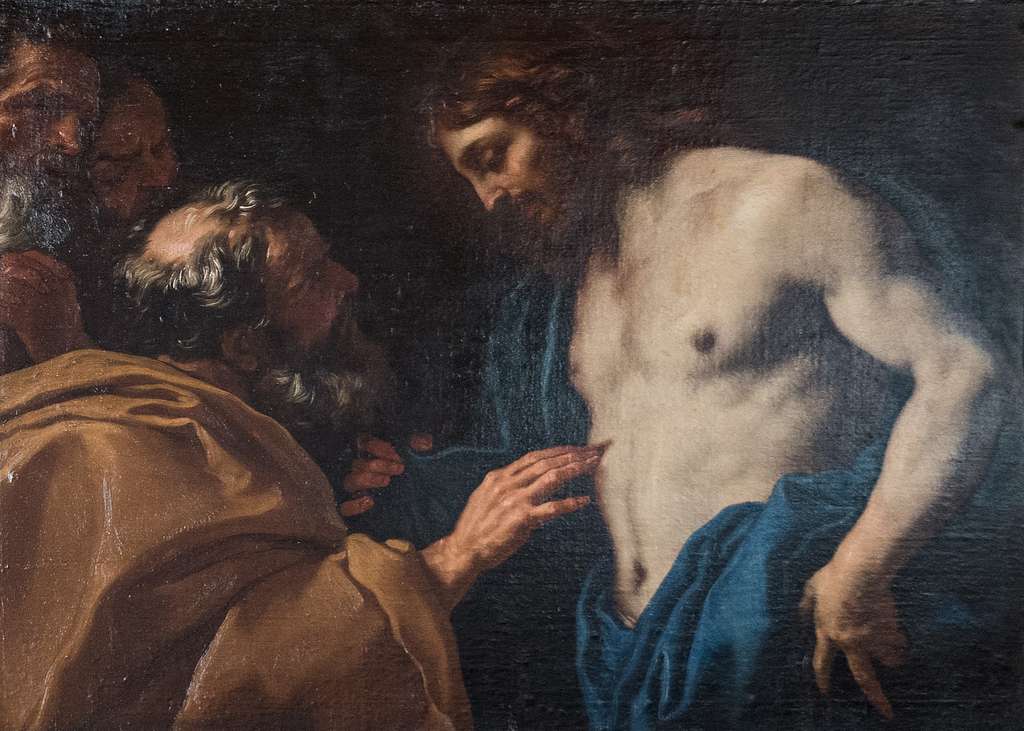
Doubting Thomas

“Have you come to believe because you have seen me? Blessed are those who have not seen and have believed.” (Jn 20:29) The Apostle Thomas is often referred to as "Doubting Thomas,” but is this really fair?  When Mary Magdalene finds the empty tomb, she runs to tell the Apostles.  The response?  Peter and John run to the tomb –– they have to see it for themselves.  Once they see the empty tomb and the face cloth rolled separately (signifying that He would be back), then they believe. When the 10 Apostles are together, Jesus appears to them, shows them His wounds, and breathes on them, saying, “Receive the Holy Spirit.”  It is this act that leads the Apostles to understand the Resurrection, but Thomas isn't with them.  He doesn't receive the signs and the Holy Spirit as the other Apostles do at this time.  Is it any wonder that he remains in the state of incomprehension that the other Apostles had also been in prior to seeing the Risen Christ? (Mk 16: 11, 13) We fail to appreciate what Thomas grappled with.  He has seen Jesus raise Lazarus from the dead, but the idea of Jesus raising Himself from the dead is beyond Thomas’s understanding.  We believe because we have the benefit of the Holy Spirit, the gift of Baptism, and 2000 years of Church teaching, with each generation of saints and doctors of the Church diving deeper into understanding and building on what came before -- and we have Thomas, who put his fingers into Christ's side and verifies that He is not a ghost, but fully alive in His Glorified Body. We often fail to peel back the layers to contemplate the deeper meaning of Jesus’s response to Thomas.  He doesn't appear in anger or condemnation.  He loves Thomas and is not willing to leave him in the same state the other Apostles had been in prior to His visit.  He wants Thomas to have the gift of the Holy Spirit too.  He has great plans for Thomas. He willingly offers the proof Thomas needs.  When Thomas is greeted with such unconditional love, he knows he's in the presence of Jesus. It is this great love that transforms Thomas just as it transformed the other Apostles. Because Jesus is willing to meet Thomas where he is, as he is, Thomas ends up spreading the Gospel all the way to India. Thomas’s questions don't phase Jesus; Our Lord wants him to understand and Thomas for his part comes with an open heart, willing to be taught.  Thomas is truly a sign of hope for all of us.  We too often struggle to understand the ways of God, and in our struggles God does not abandon us either.  He meets us where we are, as we are. If we approach our questions with an open, sincere heart, willing to accept God's timing with patience and humility, we can enter into contemplation of the divine.  It is here that we,…

Continue ReadingDoubting Thomas

Generosity

"Go, sell what you have, and give to the poor and you will have treasure in heaven" (Mk 10:21) Possession.  We usually think of Jesus curing the demoniac or movies about exorcism when we hear this word, but there are more layers and meanings than we realize at first glance. Everyone has possessions; simply having things, even a lot of things, is morally neutral.  It’s the value we place on these things in our lives that determines whether we possess things or our things possess us.  Of course, the more things we possess, the greater the challenge not to be possessed by them.  The sheer effort involved in maintaining, insuring, and securing our possessions grows as we accumulate more stuff.  So where do we fall on the spectrum?  How closely do we resemble the rich young man in the Gospel who wants eternal life but is unwilling to part with his wealth to get it (Mk 10: 17-31)? We must ask ourselves: do we focus on gratitude for what we have been given, or do we focus on accumulating more possessions to elevate our status?  Do we appreciate the talent God has given us (or our ancestors) to amass things of beauty or do we get bored with what we have?  Are we genuinely happy for our friends and neighbors when they achieve what they have worked for or are we envious of their success?  Do we look for ways to share with others or do we assume everyone else wants to take our treasures?  If we are honest with ourselves, we are all in danger of being possessed by our things to some degree, so how do we break free of this?  More importantly, why should we want to?  Breaking free begins with fasting and almsgiving.  Fasting forces us to focus on spiritual food.  If we cannot fast from a meal for health reasons, then we should fast from other things that occupy our time, for example, electronics, social media or binge watching sports on TV.  The whole point is to replace the time spent on eating (or surfing social media, etc) with prayer.  It is not so much a giving up of something we want, as it is of giving ourselves something better.  Fasting helps us to break free from envy and from our insatiable desires. It also gives us a chance to silence our self-criticism and the criticism of the evil one, who enumerates all our faults, to put ourselves in the presence of God who loves us and wants to heal our brokenness and strengthen our souls.  Almsgiving gives us a chance to minister to Jesus in His beloved poor.  Jesus tells us, “The measure you measure with will be measured back to you.” (Mt 7:2)  Almsgiving requires us to trust God that we have enough for ourselves and enough to help others.  Almsgiving on a regular basis helps us to cultivate a spirit of generosity which moves us from worrying about our possessions to gratitude…

Continue ReadingGenerosity

Your Faith Has Saved You

In the Gospel of Mark we encounter the story of the woman with a hemorrhage who follows behind Jesus in a crowd. She touches His cloak and is immediately healed. (Mk 5:21-43)  It is one of Jesus’s many miracles -- in the Bible and throughout history.  He continues to work miracles in our lives today, but so many times I hear people complain “Well, I prayed for healing and He didn’t listen to me.” These are among the most bitter people, disappointed and angry with God. So why does God heal some but not others?  I certainly cannot presume to know the mind of God, but I have pondered this question, and as I do, I turn to scripture as the key to unlock some answers.  “Unless you change and become like little children, you will never enter the Kingdom of Heaven.” (Mt 18:3) There’s that word we all run away from: “change.” None of us really want to change ourselves.  We would be much happier if God would change and run things our way, so that’s the first stumbling block. He says to become like “little children.” Little children are humble and trusting.  They don’t think they have all the answers.  Instead, they turn to their parents.  They aren’t afraid to say “I don’t know” because they haven’t had enough time on earth to become prideful -- and they trust completely. Would it be so terrible to become like little children? Wouldn’t it be a welcome respite to not feel the need to have all the answers? To not have to be in control? To not feel responsible for everything? Wouldn’t it be a relief to put down those heavy burdens He never asked us to carry in the first place? True freedom actually comes when we have the courage to change – to become humble, to become trusting, to let God be in control. This was the disposition of the woman with the hemorrhage. She didn’t demand Jesus’s attention. She didn’t try to bend Him to her will. She didn’t even try to delay Him.  She only wanted to touch the back of His cloak. She was humble. She had complete faith in Him, trusting that she would be healed. He says to her, "Your faith has saved you." He didn't just heal her physical body; he saved her soul for eternity. The woman did something else we usually overlook. She listened when He spoke to her.  Do we do the same? Prayer is a dialogue with God which means both people talk and both people listen. Do we just talk at God to give Him our list of wants and consider our “prayer” done? Do we sit with a closed heart, hoping not to hear the voice of God because we aren’t sure we are going to like what He has to say? What about forgiveness? Have we forgiven our brothers and sisters from our hearts before approaching God? If my child comes to me with dirty…

Continue ReadingYour Faith Has Saved You

End of content

No more pages to load