Hail Full of Grace

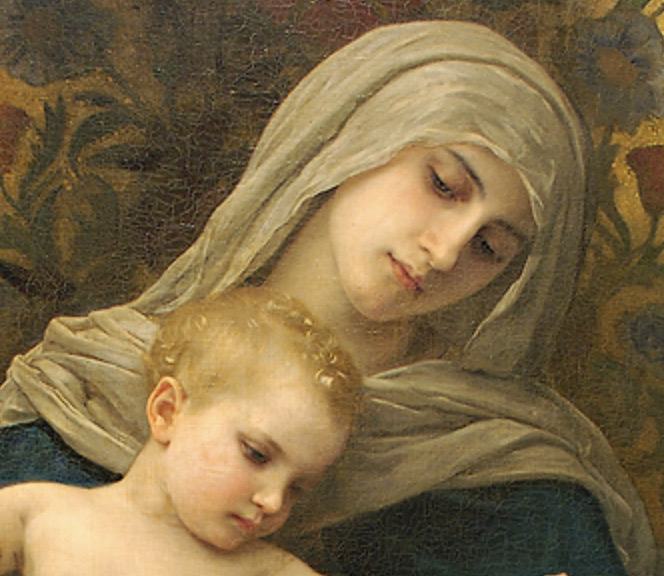
Motherhood is not only a gift from God, but also an invitation to participate with Him in the creative act.  God, who created us from dust, invites a mother in a special way to enter into the mystery of creation, to feel the first stirrings of new life, to nurture this unique and unrepeatable person within her womb, and bring this life into the world through her own sacrifice of pain.  It is through pain that women give life, which is an echo of the sacrifice of pain that Jesus endured to give us eternal life.  It is through the cooperation of one very special woman that Jesus came into the world to give us that everlasting life. When the Angel Gabriel says “hail full of grace” to the Blessed Virgin, he reveals to us the Immaculate Conception of Mary, and also the perfection of Her Divine Son.  What was hidden in the Old Testament suddenly becomes clear. Adam and Eve prior to their fall from grace converse with God openly in the Garden of Eden.  They are pure and perfect and enjoy communion with Him.  After their fall from grace they are so ashamed of their sin they cannot bear to meet God face to face and try to hide from Him.  They realize too late that God is so holy that they cannot bear direct contact with Him any longer. When Moses receives the 10 commandments, the stone is reverenced because God Himself has touched it and it symbolizes the sacred covenant between God and their nation. The Israelites build an ark to house this holy covenant. The ark itself is such a holy vessel that any unholy person who touches the ark dies on the spot.  Just as Adam and Eve were created in a state of grace, so too were Mary and Jesus.  Unlike Adam and Eve who rejected God’s plan through their disobedience, Mary and Jesus embraced God’s plan through their obedience.  (Lk 1:38; Lk 22:42)  Christ became Man to perfectly fulfill what we could not and to establish a new covenant between God and all of humanity. Jesus is the new covenant.  How much more holy is His sacred body than stone?  Does it not follow that God would create a perfect vessel to house His Sacred Body?  Would He not adorn His chosen vessel with every grace and blessing as He prepares Her to be the dwelling place of His most beloved Son? Would not this perfect vessel be free from any defects?  Mary's perfection is a sign of God the Father's love for His Son. She magnifies His grace.  Mary is the ark of the new covenant, carrying Jesus to her cousin Elizabeth who is filled with the Holy Spirit and proclaims, “Blessed are you among women.” “Hail, full of grace” reveals Mary’s perfection as a creature of God and shows us the even greater perfection and glory of God.  Our Lord desires to share with all of us the gift He gave…
Continue ReadingHail Full of Grace

The Leper is Healed

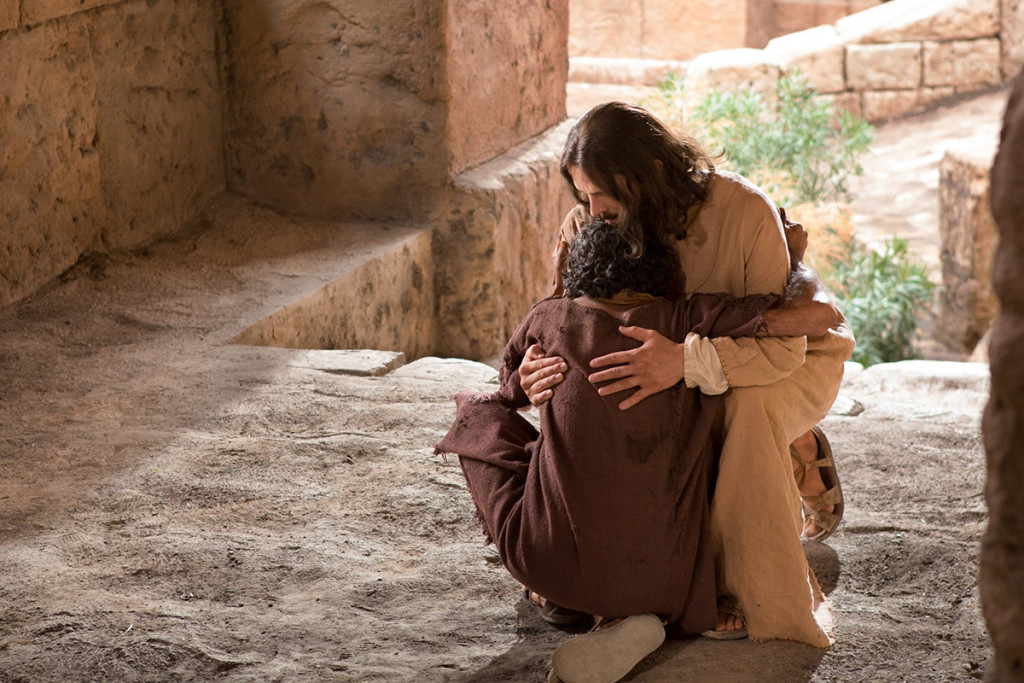
In today’s Gospel, Jesus heals a leper.  In Biblical times, leprosy was incurable and highly contagious. It was considered a punishment for sin.  People believed that what was on the inside was manifested on the outside.  The leper was therefore not shown mercy, but cast out from society.  When Jesus approaches the leper and touches him, this is the first human contact the leper has had in years.  The leper has lived apart from family and friends and has not received a human touch let alone a hug for a very long time.  Jesus reaches out with compassion, mercy, and love and touches him, healing first his broken spirit and then healing his body. In our society today, leprosy is more widespread than ever and far more damaging because it is on the inside where we don’t readily see it and we are insensitive to the damage it causes because we have lived this way for so long.  Jesus comes to us this Lent to heal us of our leprosy. Our leprosy is a disease of the heart.  How many times have we been rejected from family and friends because we don’t conform in some way to who they think we should be or how they believe we should think?  How many times do we feel the need to “fit in” because we are afraid that others won’t like our real selves?  How many times do we have judgmental thoughts or say unkind things about others because they are different from us?  Each of us has been both the leper and the one who has treated another as a leper in some way. This is precisely what Jesus wants to heal in us and He will heal us if we approach Him with faith. Jesus knows everything about us; we cannot hide our flaws, idiosyncrasies, or sins from Him.  Yet when we were in sin He died for us.  Even in our most unlovable moments, He still loves us.  More than anything else, this fact should give us the courage to look deep inside ourselves because He will heal everything we don’t like seeing if we ask Him.  He awaits our approach to give us His mercy, the same mercy He had for the lepers of biblical times.  His mercy in the Sacrament of Reconciliation completely restores us and cleans even our darkest corners. He wishes to heal our woundedness from being treated as a leper as well.  Just as He touched the leper, He touches us in the holy Eucharist.  He places Himself in our hands.  This isn’t a figure of speech.  God Himself descends from Heaven and transubstantiates – changes – the bread and wine into Himself.  We have the incredible gift of being able to touch Him and be touched by Him every day of our lives.  How many wounds He can heal if we trust Him! This Lent He invites us to be reconciled with Him.  He waits for us with mercy, ready to forgive.  He…

Continue ReadingThe Leper is Healed

Eucharist

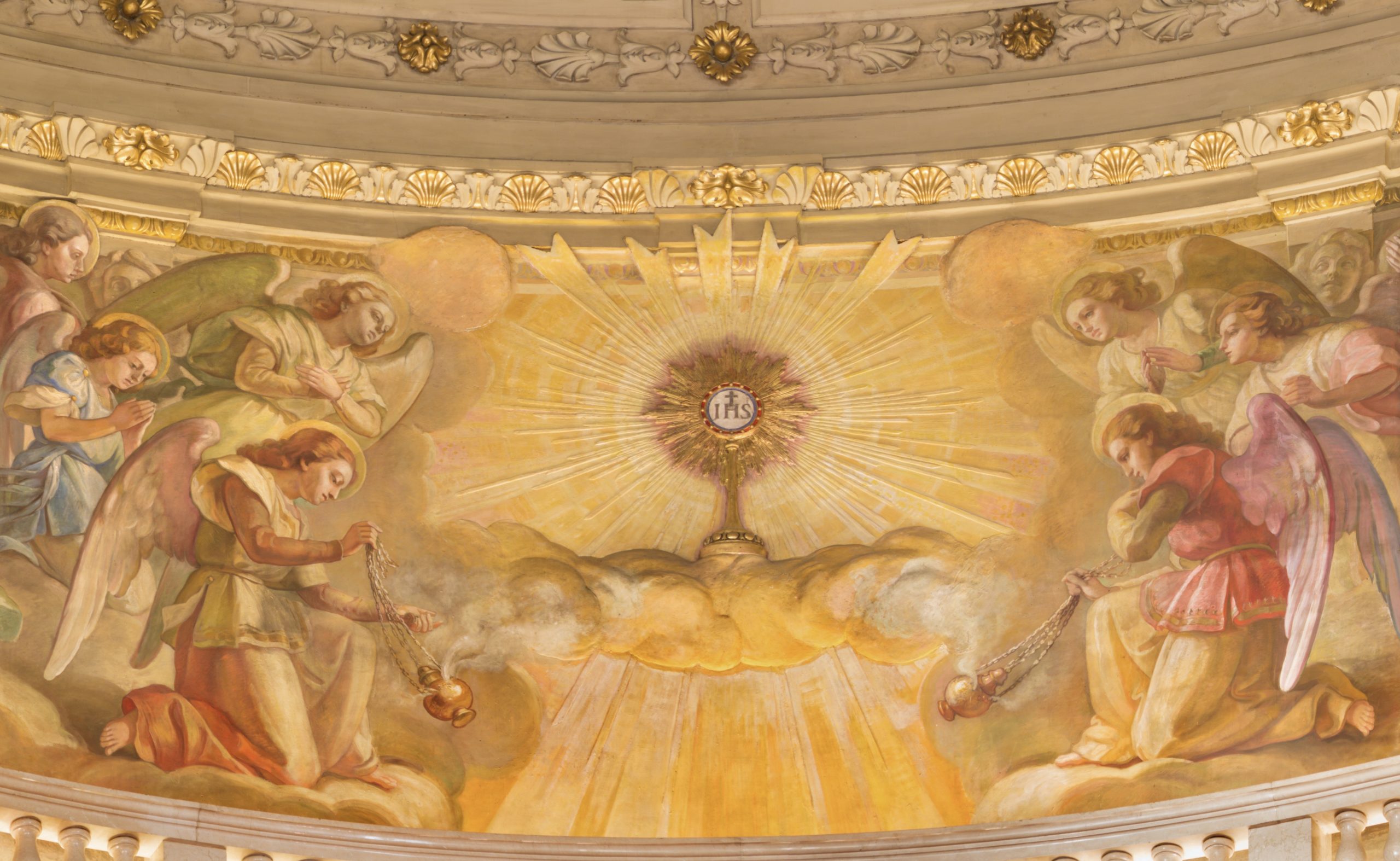
From the Question Box: If Jesus is in the bread, why do we eat Him? This question touches the heart of our faith and ponders the very nature of who God is and what His relationship with us is.  The people of Jesus’ time asked this question as well.  To begin to understand this mystery, which is the very center of our faith, we need to contemplate several theological truths. First, consuming the Eucharist is not cannibalism.  The Catechism of the Catholic Church tells us in paragraph 1367 that the sacrifice of Christ and the sacrifice of the Eucharist is one and the same, although the manner of offering is different.  The Eucharist is a non-bloody sacrifice.  The Eucharist makes present the sacrifice of the Cross and applies its fruit: everlasting redemption (CCC#1366). Second, we consume the Eucharist because Jesus told us to do so.  Jesus reveals the Eucharist to us in John 6: 51 – 58: “I am the living bread which came down from heaven. If any one eats of this bread, he will live for ever; and the bread that I will give, is my flesh, for the life of the world. The Jews then disputed among themselves, saying: How can this man give us his flesh to eat? Then Jesus said to them: Amen, amen I say unto you: Unless you eat the flesh of the Son of man, and drink his blood, you have no life in you. He who eats my flesh, and drinks my blood, has eternal life: and I will raise him up in the last day. For my flesh is food indeed: and my blood is drink indeed. He that eats my flesh, and drinks my blood, abides in me, and I in him. As the living Father has sent me, and I live because of the Father; so he that eats me, will live because of me. This is the bread that came down from heaven. Not as your fathers ate and died; he who eats this bread, will live for ever.” To comprehend what He is telling us, we need to look at God’s revelation to us in the Old Testament.  We must realize that the entire Bible should be viewed as one book, one tapestry if you will.  Just as colors are woven into a beautiful cloth and each color enhances the entire picture and contributes to the images, so too each book of the Bible contributes to our understanding of the truths God has revealed.  One must look at the entire Bible to understand the context and meaning of each book.  Just as removing one color from the tapestry removes depth, beauty, and meaning from the picture, so too we need every book in the Bible to understand what God is revealing to us. Our first encounter of bread and wine being offered is in Genesis when Melchizedec, the King of Salem (Salem means peace and we refer to Jesus as “the Prince of Peace”), appears to…

Continue ReadingEucharist

End of content

No more pages to load